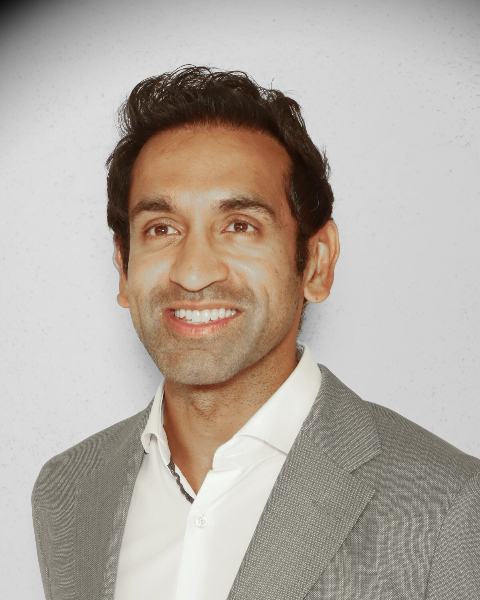
Co-Founder Trust AI Pleasanton, California, United States
Disclosure(s):
Shervin Molayem, DDS, PERIO: No relevant disclosure to display
Divian N. Patel, DDS: No relevant disclosure to display
Modern dentistry is more complex than ever. Clinical decisions now require integrating radiographs, CBCT, perio data, restorative planning, airway considerations, systemic risk factors, and patient expectations. At the same time, workflows are fragmented across disconnected software systems. The cognitive load on dentists continues to increase.
This course begins with clinical reality. It acknowledges the daily pressure of diagnosis, treatment planning, documentation, compliance, and production targets. Before discussing technology, we ground the conversation in the real environment dentists operate in.
We then examine the current AI landscape in dentistry. Many tools offer isolated detections or surface-level insights. Few integrate into clinical reasoning or align with how dentists actually think and practice. The result is fragmentation rather than clarity.
From there, we define a new standard. AI should not simply detect findings. It must understand diagnostic uncertainty, workflow constraints, and the structured reasoning that underpins treatment planning. The shift is from feature comparison to category creation. Dentistry-native AI must function as decision support that enhances judgment rather than replaces it.
The core of the session demonstrates this through real clinical cases. Attendees will see structured reasoning applied to complex scenarios, including diagnostic prioritization, risk stratification, and treatment sequencing. Dentists trust logic and case analysis more than feature lists. This session shows how AI can support that logic transparently.
Finally, we expand beyond isolated tools to workflow integration. When AI becomes embedded within the practice management system, it transitions from an add-on to infrastructure. Scheduling, documentation, risk scoring, and treatment planning can become coordinated rather than siloed.
Learning Objectives:
Analyze the growing cognitive and workflow complexity in modern dentistry and identify where current AI tools fail to align with real-world clinical decision-making.
Differentiate surface-level AI detection tools from dentistry-native decision support systems that incorporate structured reasoning, diagnostic uncertainty, and workflow constraints.
Evaluate how integrated AI infrastructure within the practice management system can improve diagnostic consistency, treatment sequencing, and operational efficiency.

.png)